%20(1)_edited.png)


Thailand Planner Method — Structured Destination Wedding Planning in Thailand
.png)
A successful destination wedding in Thailand does not happen by chance.
Behind every seamless celebration lies a carefully designed structure: decisions made in the right order, professionals working under one direction, and a planning system that guides the project from the first conversation to the final farewell.
Many weddings appear beautiful in photographs but quickly fade from memory. This usually happens when planning focuses only on decoration or trends rather than the overall architecture of the event.
Our work follows a different philosophy.
Instead of assembling vendors around a date, we build the wedding as a structured project. The concept, the cultural context, the guest experience, and the operational framework evolve together through a defined planning method.
This approach allows creativity and precision to work side by side.
.png)
Why Destination Wedding Planning in Thailand Requires a Professional Method
Planning a destination wedding in Thailand involves far more than selecting a venue and inviting guests.
Couples and families often travel from different countries, cultural traditions must be respected, and celebrations may take place across several days and multiple locations. Logistics, hospitality, design, and production must function together without conflict.
Thailand also has its own communication culture. Politeness and social harmony are deeply valued, and direct refusal is sometimes avoided in everyday interactions. While this approach maintains respect in daily life, large international events require clearer project management.
For this reason, we operate with a structured system where responsibilities, timelines, and expectations are clearly defined from the beginning.
When something is confirmed, it is confirmed. When adjustments are necessary, they are addressed early. This clarity protects the wedding and ensures that every professional involved understands the objective.
.png)
Destination Weddings Are Complex Projects, Not Simple Events
A destination wedding resembles a large creative production rather than a single ceremony.
Design teams, hospitality teams, production crews, performers, chefs, and many other specialists contribute to the final result. Without direction these participants may work independently rather than collaboratively.
Our method places the planning team at the center of the project.
Instead of introducing vendors to couples and allowing coordination to happen informally, we select and manage every professional under one planning structure. Each supplier works within the framework we establish so that creative decisions, logistics, and production remain aligned.
This centralized direction allows the couple and their families to focus on their celebration while the planning team manages the complexity behind the scenes.
.png)
The Siam Planner Planning Framework
Every destination wedding we manage follows a sequence of stages. Each stage focuses on a specific set of objectives while preparing the foundation for the next.
The process does not begin with venues or decoration. It begins with understanding the couple and defining the concept of the celebration.
Only after that foundation is clear do we build the systems required to bring the wedding to life.
.png)
Stage Zero — First Contact and Compatibility Review
Initial Wedding Enquiry and Consultation
The planning journey usually begins with a message through our enquiry form, email, or direct contact channels.
During this conversation we learn the basic outline of the wedding: expected guest numbers, cultural traditions involved, preferred regions in Thailand, and the approximate timeline.
This stage allows us to understand the couple’s vision before any planning decisions are made.
Budget Alignment for Destination Weddings
Destination weddings vary greatly in scale. Some celebrations host small family gatherings, while others involve hundreds of guests across several days of events.
Understanding the approximate investment level early helps determine whether the project aligns with the planning structure required.
We focus on full-scope destination weddings and guide couples who wish to build a complete experience rather than a single event.
.png)
Stage One — Engagement and Planning Activation
Contract, Planning Scope and Timeline
Once both sides agree to move forward, the planning relationship begins formally.
A contract defines the scope of work and the planning timeline. This stage activates the project and allows the wedding to progress into structured development.
Establishing Communication and Planning Discipline
Clear communication channels are established between the couple and the planning team. From this point forward decisions follow an organized rhythm rather than being made randomly.
This discipline ensures that creative ideas can evolve while the operational structure remains stable.
.png)
Stage Two — Wedding Concept and Creative Direction
Studying the Couple, Culture and Families
Every wedding begins with understanding the people behind it.
We study the couple’s story, their cultural traditions, their families, and the type of atmosphere they want their guests to experience. Cultural heritage often plays an important role, particularly in multicultural weddings where multiple traditions must coexist.
Understanding these elements provides the foundation for the entire celebration.
Designing the Wedding Narrative
Rather than beginning with decoration themes, we focus on the narrative of the event.
What atmosphere should guests experience when they arrive in Thailand? How will ceremonies and celebrations unfold across the wedding week? What moments should guests remember years later?
These questions shape the concept guiding every later decision.
Developing Unique Wedding Elements
Once the narrative is defined, creative elements begin to emerge.
Custom invitations, original music, personalized digital platforms, artistic installations, and distinctive ceremony environments may all be developed during this stage. These elements are not added randomly; they contribute to the overall composition of the celebration.
.png)
Stage Three — System Building and Organization
Venue Research Based on Wedding Concept
Only after the concept of the wedding is clear do we begin evaluating venues.
The objective is not simply to find beautiful locations but to identify spaces that support the structure of the celebration. The venue must serve the concept rather than restrict it.
In some cases established resorts or villas provide the ideal setting. In others, spaces are transformed or constructed specifically for the event.
Selecting and Managing Wedding Suppliers
Once the venue is confirmed, we assemble the broader team of professionals required for the wedding.
Photographers, entertainment professionals, production crews, hospitality teams, and many other specialists are selected according to the needs of the project. All suppliers work under our direction so that creative decisions and operational requirements remain coordinated.
Production Planning for Destination Weddings
At the same time, technical production planning begins.
Lighting systems, staging, sound design, guest logistics, and hospitality operations are mapped carefully to ensure that every part of the celebration can be executed smoothly.
Strategic Budget Governance for Destination Weddings
Destination weddings often involve significant investment. Our role is to guide couples in allocating resources where they create the greatest impact.
Rather than spreading budgets evenly across every element, we identify the components that shape the experience most strongly — guest hospitality, creative environments, cultural ceremonies, and seamless coordination.
Strategic budgeting ensures that the final celebration feels far more impressive than the numbers alone might suggest. A more detailed explanation of our financial model appears on the dedicated budget section of this platform.
.png)
Stage Four — Event Direction and Operational Preparation
Wedding Week Timeline Engineering
As the wedding date approaches, the focus shifts toward operational preparation.
Detailed timelines are created for each event within the wedding week. The sequence of ceremonies, receptions, and guest gatherings is structured so that the celebration flows naturally.
Technical Production Planning
Production teams prepare staging, lighting, sound systems, and visual environments required for the celebration. These technical elements must support both the creative concept and the practical needs of the event.
Rehearsals and Operational Readiness
Before the wedding week begins, rehearsals and coordination sessions ensure that everyone involved understands the sequence of events.
These rehearsals allow the entire team to operate confidently once the celebration begins.
.png)
Stage Five — Wedding Week Management and Execution
Real-Time Event Direction
When the wedding week arrives, the planning team moves into real-time management.
Every event is monitored and coordinated to ensure that schedules, logistics, and creative elements unfold according to the planned structure.
Managing the Guest Experience
Guests experience the wedding as a seamless sequence of moments — ceremonies, celebrations, hospitality, and shared experiences across Thailand.
Behind the scenes, the planning team manages the complex orchestration required to make this possible.
.png)
Closure and Legacy After the Wedding
Project Completion and Documentation
Once the final events conclude, the project enters its closing stage.
Documentation such as photography and film is organized, supplier agreements are completed, and the planning process is formally concluded.
Preserving the Story of the Celebration
For couples and families, the celebration continues through the memories created during the wedding week.
Photographs, films, and shared experiences become the lasting record of the celebration that brought everyone together.
.png)
Why We Never Begin Wedding Planning With the Venue
Many weddings start with a venue search.
A location is chosen first, and the celebration is designed around the limitations of that space.
Our method reverses this order.
Concept comes first.
Structure comes second.
Location follows.
When the concept of the wedding is clearly defined, the right venues become obvious. The location supports the celebration rather than dictating it.
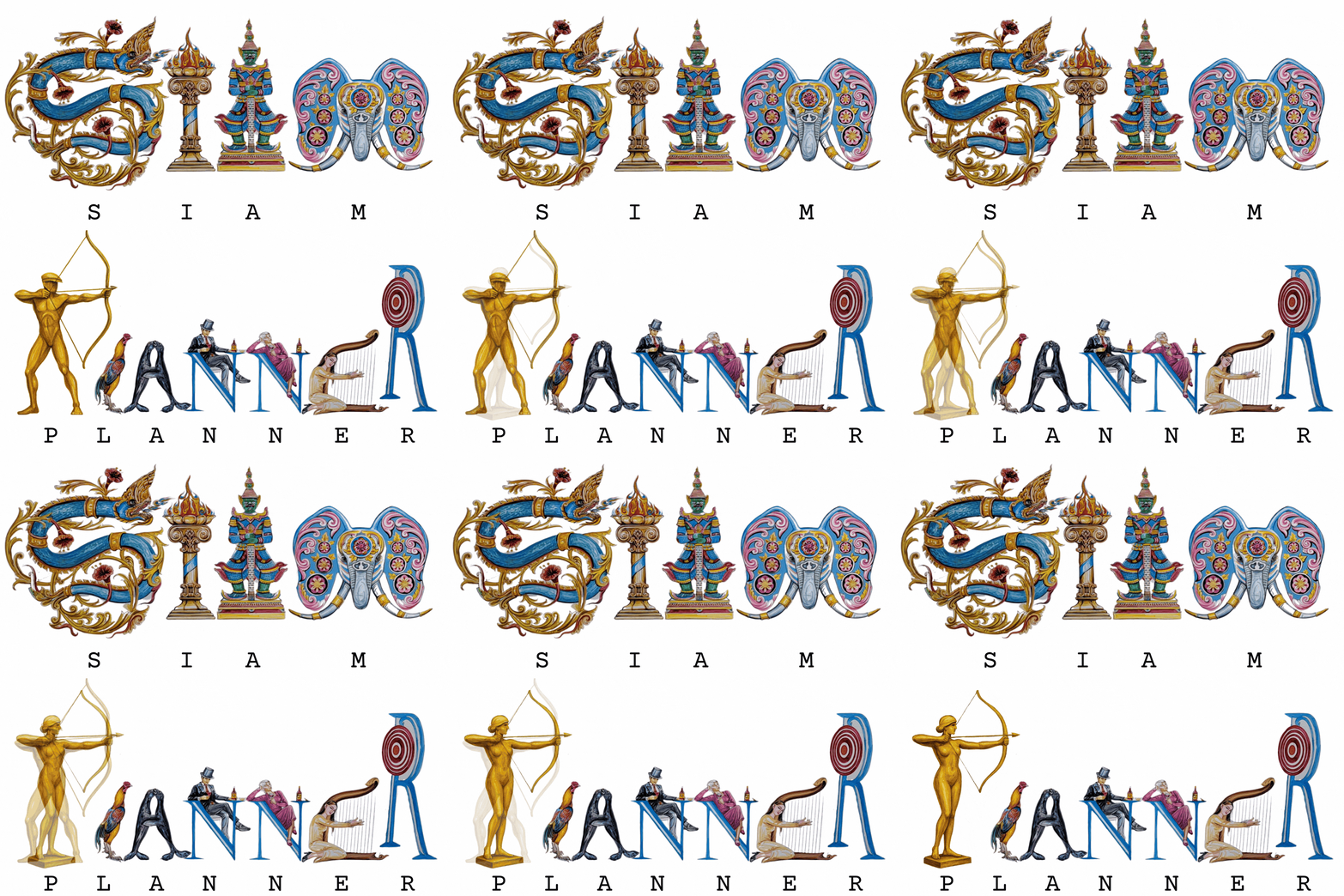
Our wedding planning method in Thailand is structured, not improvised — each destination wedding is designed, organized, and executed under one system, never dependent on venues or fixed suppliers.